
Orthotics 3D
Precision Orthotics 3D, Built Around You.
What We Offer
What are prescription orthotics?
Orthotics are precision medical devices that are custom made to ease the symptoms. Prescribed by Podiatrist just for you to help to correct foot deformity. They are a conservative (non-invasive) treatment. They help your feet to function more efficiently, allowing healing to occur. If worn regularly they should help relieve pain and prevent the development of additional foot and related problems. Orthotics are the eyes for the feet, like eyeglasses your prescription must be based on an accurate diagnosis of any pathology.
There are various types of orthotics for problems in children, adult, sports person and diabetic patient.
What are the difference between OTC orthoses?
OTC (over-the-counter) orthotics are pre-made insoles you buy off the shelf at a pharmacy or sports shop. They come in standard sizes and shapes, offer general support or cushioning, and are designed to fit the average foot.
The key difference is fit and purpose. Prescription/Custom orthotics are built around your foot to fix a specific problem. OTC ones are generic — they may help with mild discomfort or fatigue, but they're not treating anything in a targeted way.
A rough analogy: it's the difference between glasses prescribed after an eye exam versus reading glasses grabbed from a rack at the chemist.
3D Printed Prescription Orthotics
What makes them different?
Unlike standard insoles you buy in a shop, your 3D printed orthotics are made specifically for you.
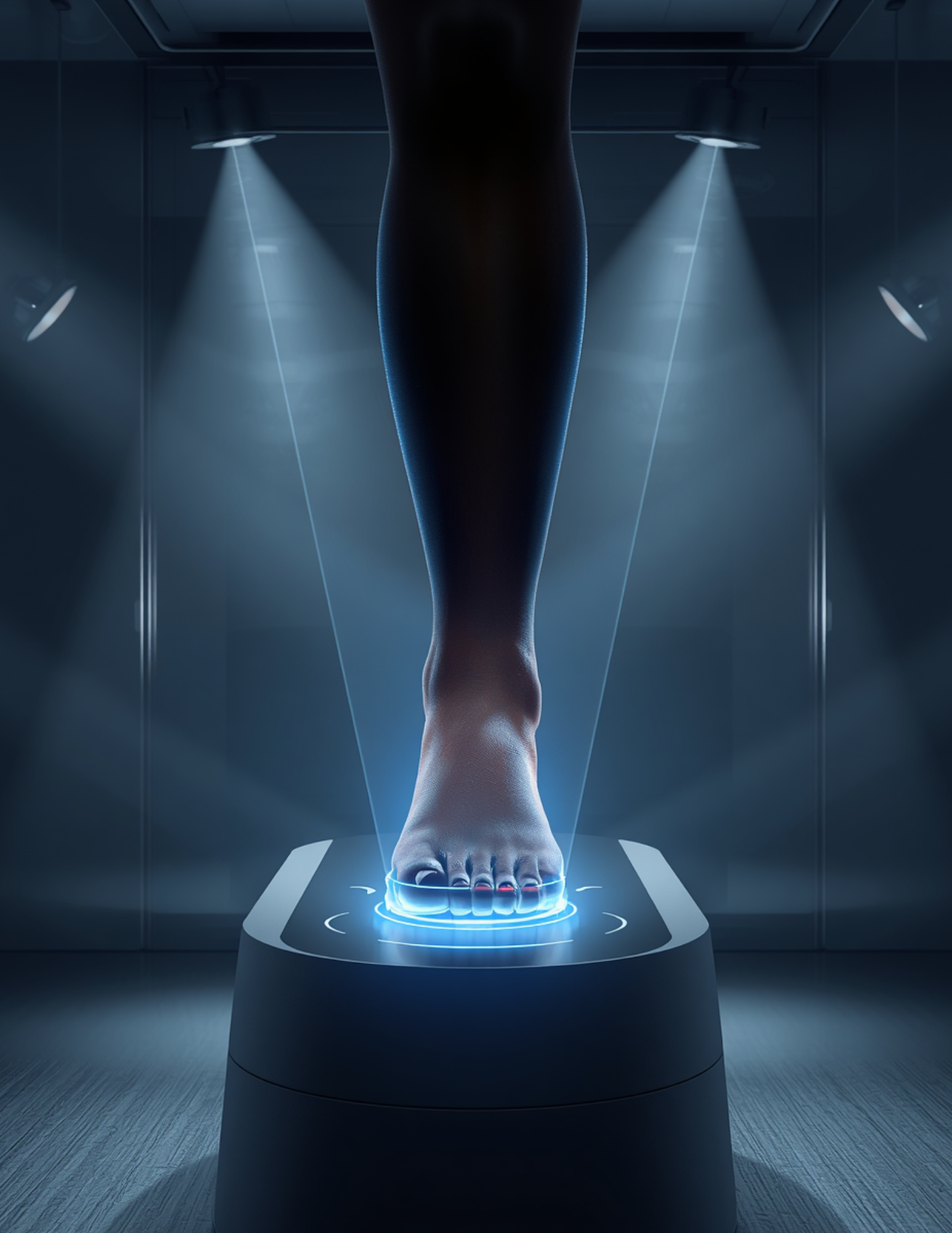
A digital scan of your foot is taken, and your orthotic is designed and printed to match your exact shape — not an average foot, yours.
This means:
Better fit — no gaps, no pressure points, no sliding around in your shoe
Targeted support — firm where your foot needs correcting, cushioned where it needs comfort
Slim and lightweight — easy to wear all day without bulk
Long lasting — if you ever need a replacement, it's printed from the same file, identical every time
Why does this matter for you?
A poorly fitting insole can do very little — or even make things worse. When your orthotic is built around your foot, it works with your natural movement to reduce pain, improve your posture, and protect your joints over time.
fAQ?
-
Back pain, Knee pain, Leg pain, Heel pain, Foot ulceration, Ankle sprain, Tendonitis In-toeing, Flat foot, Muscular pain, etc.
-
No, any practitioner claiming this is misleading patients. An orthotics is not a magical device. However, orthotics can give wonderful results and can be used for a wide plethora of complaints.
-
Yes. Ligaments, tendons, and muscles are all attached to bones. Considering one of the main roles of an orthotic is to control bones all these structures can become inflamed. However, with slow progressive build-up of usage the orthotic this should not cause any problems.
Step 1 — Biomechanical Assessment
Your podiatrist examines your feet, ankles, and legs while you're standing and sitting. This identifies any structural issues — such as flat feet, high arches, or joint misalignment — that may be causing your pain or affecting how you move.
Your journey to 3D Printed Orthotics
Step 2 — Gait Analysis
You walk or run while being observed or recorded. This shows exactly how your foot moves with each step — where it rolls, where pressure builds, and where your body is compensating. What looks fine standing still often tells a different story in motion.
Step 3 — 3D Laser Scan
Both feet are scanned using a precise laser scanner. This captures the exact shape and contours of your feet in seconds — far more accurate than traditional plaster or foam moulds. No mess, no waiting, no discomfort.
What happens next?
Your scan and assessment findings are combined to design an orthotic built around your foot and your specific needs. It is then 3D printed to exact specifications and ready to fit into your footwear.
Warning: Beware of the similar look a like products, that are available through internet and sport shops. They probably be shaped and called insole / orthoses, but those products may do more harm than good. A prescriptive orthoses must be dispensed by qualified professional.
A Podiatrist (foot specialist) will give orthoses for medical conditions, after careful assessment to provide relive from discomfort.